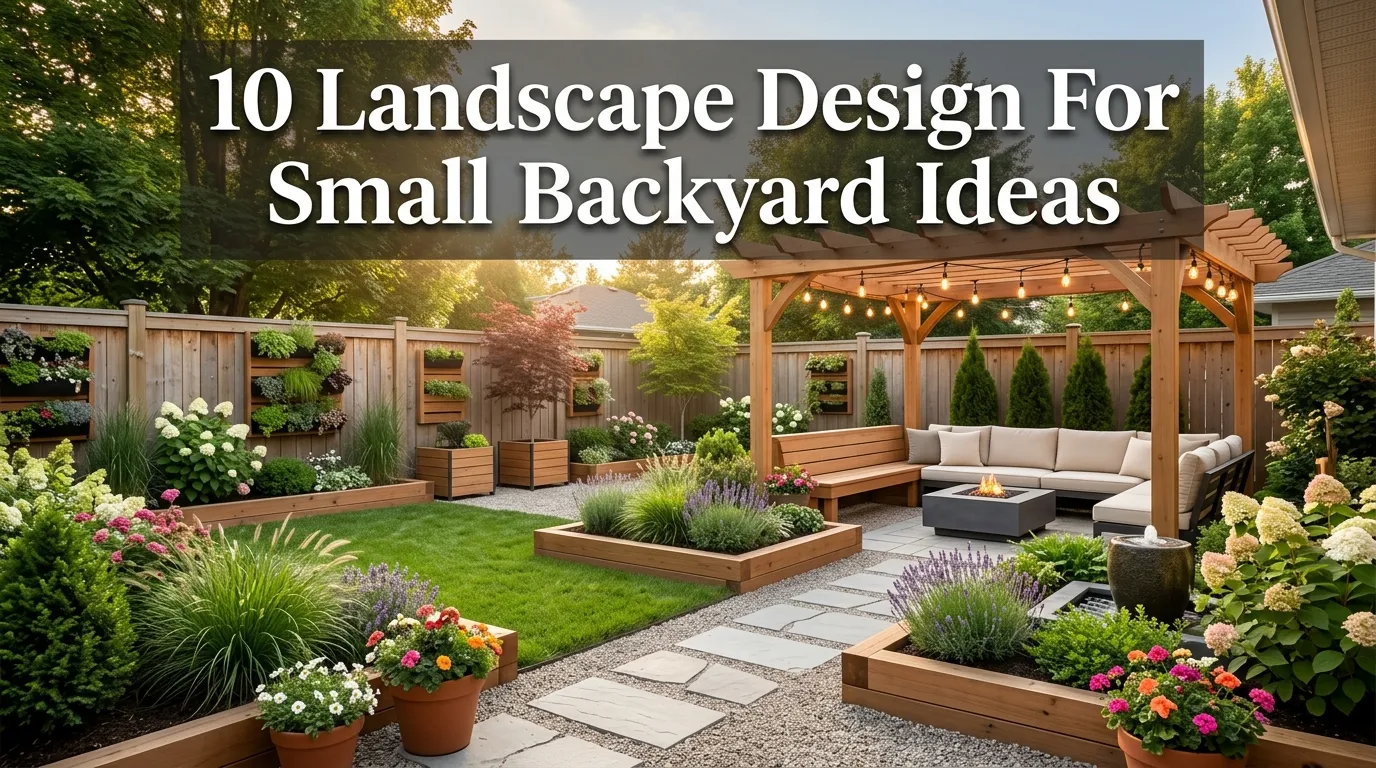
10 Landscape Design For Small Backyard Ideas
A small backyard can still feel like the best room in the house. When space is limited, every chair, plant, stone, light, and corner has to work harder. That is why smart Landscape Design matters so much for USA homeowners, renters, and families who want beauty without wasting square footage. You do not need a huge lawn or expensive remodel to create a backyard that feels calm, stylish, and useful. You need clear zones, simple materials, practical planting, and a layout that makes the space easier to enjoy.
1. Patio Zones
- Create one clear area for sitting, dining, or relaxing.
- Use pavers, gravel, brick, or outdoor tile for structure.
- Choose smaller furniture that fits the space naturally.
- Add one large planter for softness and height.
- Keep walkways open so the yard does not feel tight.
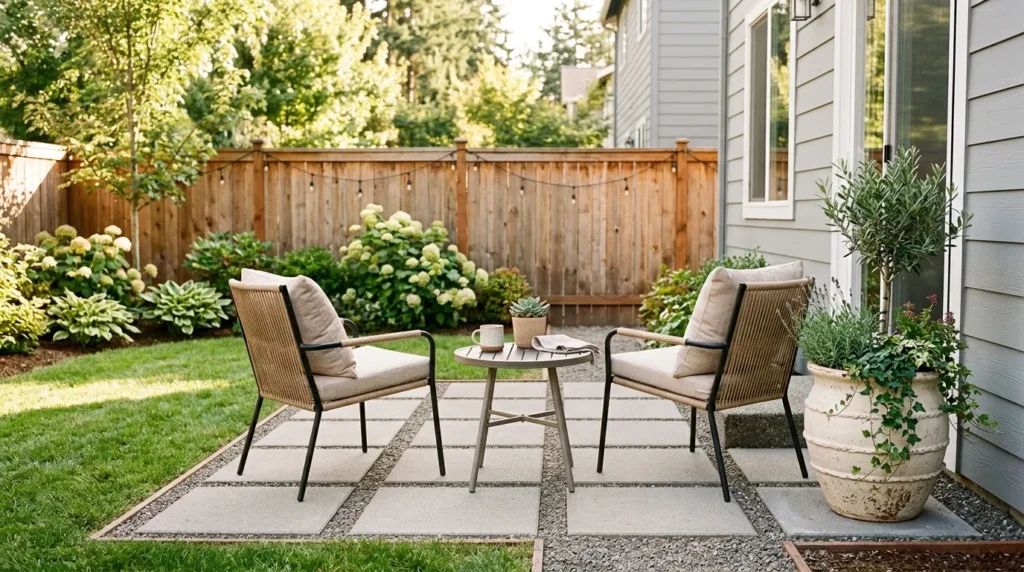
A small patio zone can make a tiny backyard feel instantly organized. Instead of treating the whole yard as one open leftover space, give one area a clear purpose for sitting, eating, or relaxing. A simple square or rectangle patio works best because it uses space efficiently and keeps furniture placement easy. Concrete pavers, brick, pea gravel, or porcelain outdoor tiles can all work, depending on your budget. In my experience, small patios look better when the furniture is slightly scaled down, not squeezed in from a larger deck setup.
This idea changes the way people use the backyard because it creates a real destination. A bistro table, two slim chairs, and one planter can turn an empty corner into a breakfast spot or evening tea area. Keep the surface level, choose weather-safe furniture, and leave enough walking room around the seating. If the patio touches the house, connect it visually with similar colors from your indoor decor. That simple connection makes the outdoor area feel like an extension of the home, not a separate forgotten patch in daily life.
2. Curved Pathway
- Add a soft walking route through the backyard.
- Use stepping stones, gravel, flagstone, or decomposed granite.
- Keep the curve gentle so the yard still feels open.
- Border the path with low plants or groundcover.
- Add warm path lights only where needed.
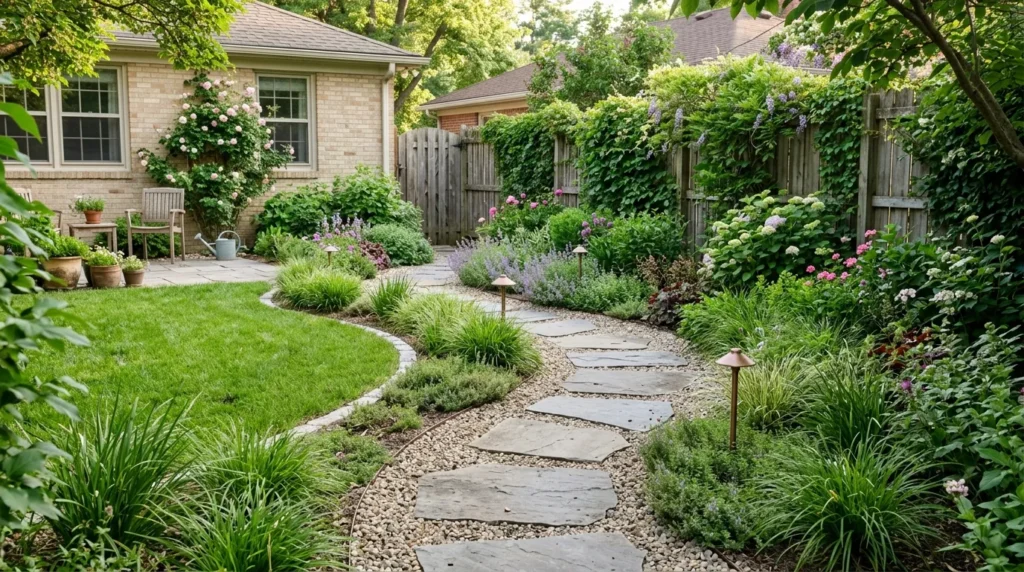
A curved pathway can make a small backyard feel softer and bigger. Straight lines are useful, but a gentle curve encourages the eye to move slowly through the space, which creates the feeling of depth. Use stepping stones, gravel, decomposed granite, or flagstone to shape the route. The path does not need to be long. Even a short curve from the back door to a seating nook can make the yard feel planned. That’s why many designers recommend movement lines when a yard feels flat or boxy outside at first glance.
The best part is that a curved path adds beauty while solving daily use problems. It keeps feet off muddy grass, guides guests naturally, and separates planting areas without adding bulky walls. For a clean look, keep the path width consistent and use low plants along the edge. Creeping thyme, mondo grass, liriope, or small ornamental grasses can soften the border. At night, add two or three warm path lights instead of lining the entire route. The result feels graceful, practical, and easy to maintain for most homes all year.
3. Vertical Garden
- Use fences, walls, or railings for extra planting space.
- Add wall planters, trellises, pocket planters, or herb shelves.
- Keep containers matching for a cleaner design.
- Choose plants with similar light and watering needs.
- Great for patios, balconies, and narrow yards.
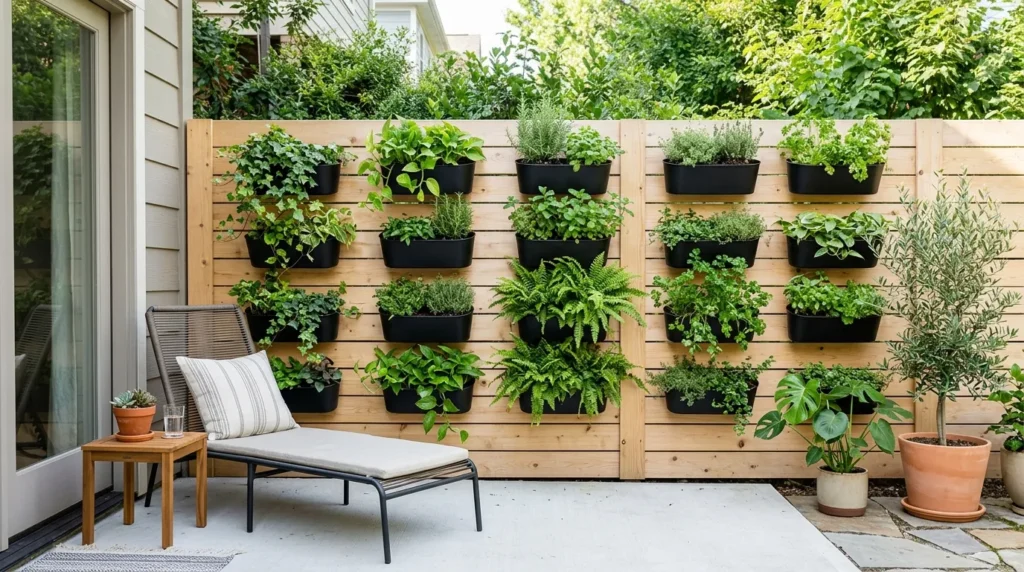
A vertical garden gives a small backyard more greenery without stealing floor space. When the ground area is limited, walls, fences, and narrow side sections become valuable design surfaces. You can use wall planters, slim trellises, railing boxes, stacked herb shelves, or hanging pockets. The key is keeping the system neat and repeated, not random. I’ve noticed vertical gardens look more polished when containers match and plants share similar colors. This keeps the wall lush but controlled, which is important in a compact outdoor space that needs breathing room visually.
This idea is especially useful for townhomes, apartments, and fenced suburban yards where privacy matters. A planted wall can soften a plain fence, hide utility areas, or create a pretty backdrop behind seating. Choose herbs near a kitchen door, trailing plants for softness, or drought-tolerant succulents for hot patios. Make sure drainage works before mounting anything, because water stains can ruin the look. With the right setup, the backyard feels taller, fresher, and more layered, while still leaving the floor open for movement and furniture during daily use outdoors comfortably.
4. Built-In Bench
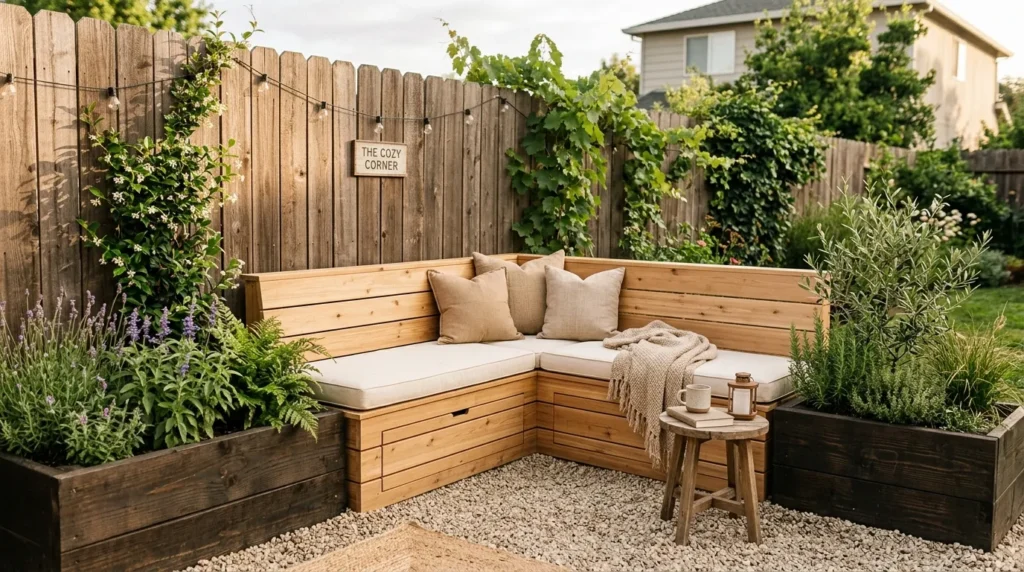
- Use fence edges, deck borders, or planter walls for seating.
- Add storage underneath for cushions or garden tools.
- Choose wood, concrete, composite, or painted block.
- Keep cushions simple and weather-resistant.
- Add planters at the ends for a softer finish.
A built-in bench can save more space than separate outdoor chairs. In a small backyard, loose furniture often creates awkward gaps, blocked pathways, and cluttered corners. A bench along a fence, wall, planter edge, or deck border gives seating without taking over the center. Wood, composite decking, concrete, or painted block can all work, depending on the style of the home. The cleanest version has straight lines, hidden storage, and cushions in outdoor fabric. It feels custom even when the structure is simple and affordable for weekend projects too outdoors.
The transformation is both visual and practical because seating becomes part of the yard itself. You can tuck pillows away, store garden tools under the bench, or create a dining corner with a narrow table. In many small homes, this setup works better than a full patio set because it leaves open floor space. Add planters at one or both ends to soften the structure. Keep cushion colors simple, such as cream, charcoal, olive, or tan. The result feels tidy, comfortable, and much more useful for everyday outdoor living with family.
5. Gravel Lounge
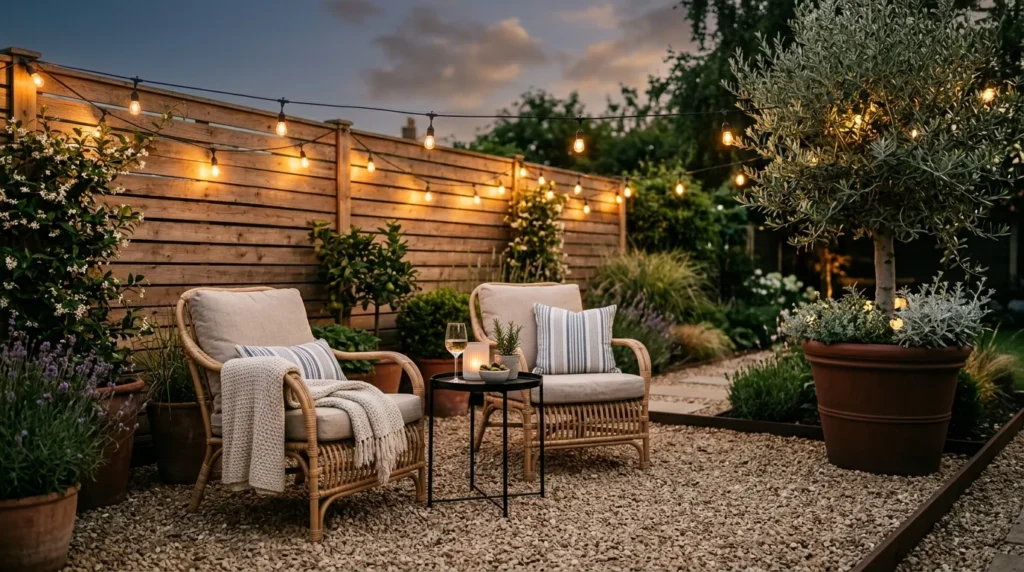
- Use gravel to define a relaxed outdoor sitting area.
- Add edging to keep the shape clean and controlled.
- Pair with two chairs, a side table, and one planter.
- Works well where grass struggles or looks patchy.
- Add landscape fabric underneath to reduce weeds.
A gravel lounge can turn a plain patch of dirt into a polished outdoor room. Gravel is budget-friendly, drains well, and works in many climates across the USA, especially where grass struggles. Use pea gravel, crushed granite, or small river rock as the base, then define the area with metal, brick, or stone edging. Add two lounge chairs, a small table, and one large planter. The space immediately feels finished because the ground surface has texture, purpose, and a clear boundary without needing expensive hardscaping or concrete work outside today.
This is one of the easiest upgrades for renters and homeowners who want impact without major construction. Gravel lounges work near fences, under trees, beside sheds, or in unused corners behind the house. Add landscape fabric underneath to reduce weeds, but make sure water can still drain. I’ve seen this work well in many homes where the lawn was patchy or too small to be useful. With simple furniture and warm lighting, the area becomes a relaxed reading spot, cocktail corner, or quiet evening hangout after work at home nightly.
6. Raised Planters
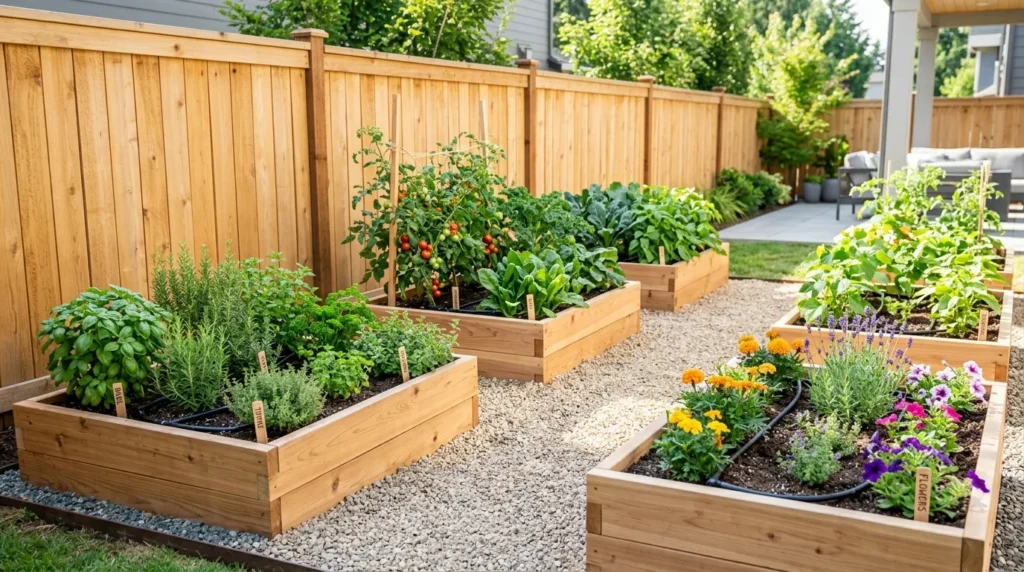
- Use raised boxes to organize plants neatly.
- Choose cedar, redwood, metal, composite, or painted wood.
- Grow herbs, compact vegetables, flowers, or dwarf shrubs.
- Place boxes along fences, patios, or narrow walkways.
- Add drainage holes and quality soil for better results.
Raised planter boxes bring structure, height, and easier gardening to a small backyard. They help separate plants from walking areas, which keeps everything cleaner and more intentional. Use cedar, redwood, composite boards, galvanized metal, or painted wood, depending on the look you want. Rectangular boxes usually fit best against fences or along patio edges. Add herbs, compact vegetables, dwarf shrubs, or seasonal flowers. The raised height also makes planting and watering easier, especially for families who want beauty without bending over constantly during weekend care and cleanup outside at home.
This idea works because it turns plants into architecture, not just decoration. A row of raised boxes can frame a seating area, hide an ugly fence base, or create a soft border around a gravel patio. Use good soil, drainage holes, and a simple drip line if possible. For a polished style, repeat the same planter material and limit the plant palette. I’ve noticed small yards feel calmer when planters match. The final result feels organized, productive, and attractive from both inside the house and outside throughout the season easily.
7. Privacy Screen
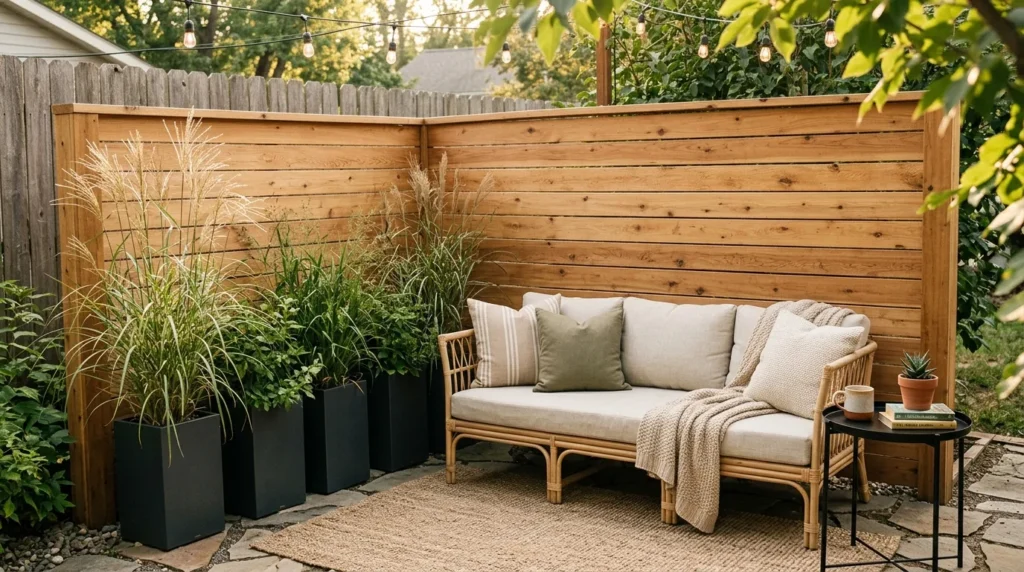
- Add privacy without building a heavy wall.
- Use wood slats, bamboo, lattice, metal panels, or hedges.
- Place screens near seating, dining, or exposed corners.
- Hide trash bins, AC units, or plain fences.
- Add climbing plants where your climate allows.
A privacy screen can make a small backyard feel more comfortable immediately. When neighbors, driveways, or nearby windows overlook the space, people use the yard less. A screen creates a sense of enclosure without building a heavy wall. Try horizontal wood slats, black metal panels, bamboo fencing, lattice, tall grasses, or narrow evergreen hedges. The best choice depends on your climate, HOA rules, and home style. Keep the screen simple and repeat nearby materials so it feels built into the outdoor plan rather than added later as an awkward afterthought.
The transformation is emotional as much as visual. Once the yard feels private, it becomes easier to relax, eat outside, stretch, garden, or let kids play. A screen can also hide trash bins, utility boxes, AC units, or a plain fence. Add climbing jasmine, clematis, or star jasmine where the climate allows, but keep growth controlled. For narrow yards, choose slim planters instead of bulky shrubs. This keeps the floor open while still softening the view. The space feels safer, calmer, and much more finished for daily living outside overall.
8. Mini Firepit
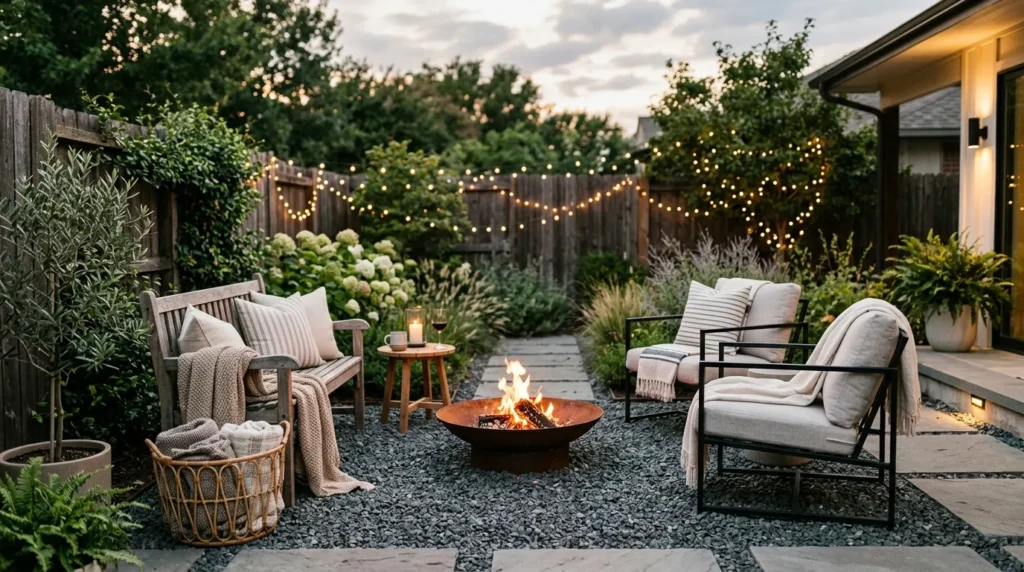
- Choose a small fire bowl, gas table, or compact firepit.
- Place it on pavers, stone, concrete, or gravel.
- Keep seating simple and safely spaced.
- Add one side table or blanket basket.
- Always follow local fire rules and clearance guidance.
A mini firepit can make a compact backyard feel like a real gathering space. The key is choosing a size that fits safely without crowding the whole yard. A small steel bowl, gas fire table, or concrete firepit can work if it sits on pavers, gravel, or another fire-safe surface. Keep seating simple with two chairs, a bench, or built-in edge seating. That’s why many designers recommend one strong focal point instead of many small decorations in tight outdoor areas where every inch matters for comfort and flow outside daily.
This feature adds warmth, mood, and function without needing a large entertainment zone. Families can use it for cool fall evenings, casual weekends, or quiet nights outside after dinner. Leave safe clearance around the firepit, follow local rules, and avoid placing it under low branches or covered structures. A small side table, outdoor blanket basket, and warm lights are enough. When the scale is right, the fire area feels inviting instead of crowded, giving the backyard a clear reason to be used more often through the year at home easily.
9. Corner Pergola
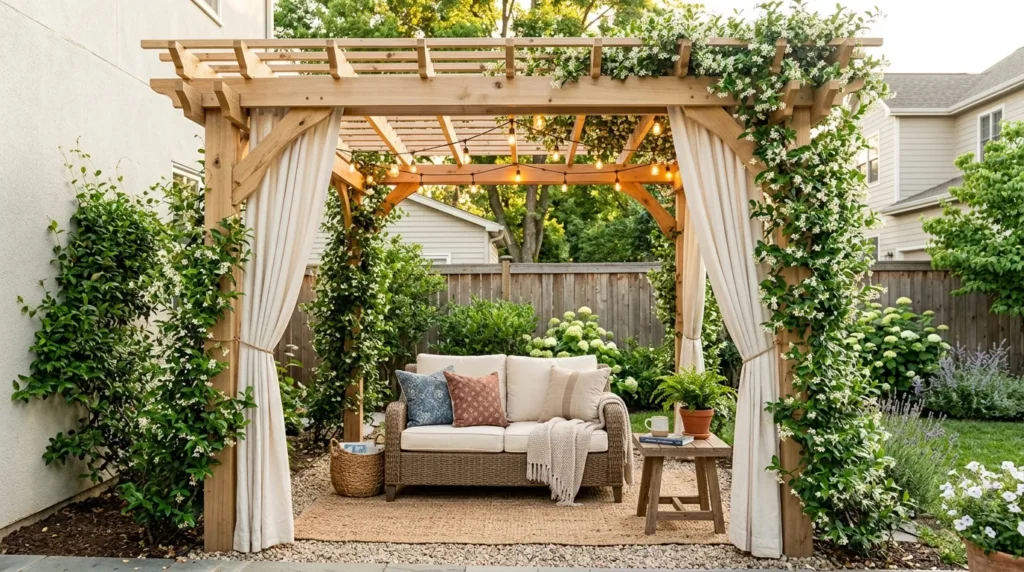
- Place a pergola in one corner to save open space.
- Use wood, vinyl, or black metal for the frame.
- Add climbing plants, curtains, or simple lights.
- Use it for seating, dining, or a reading nook.
- Keep the design light so it does not overpower the yard.
A corner pergola can give a small backyard height without covering the whole space. Many compact yards feel flat because everything stays at ground level. A pergola adds vertical structure, shade, and a sense of arrival, especially when placed in one back corner. Use wood, vinyl, or black metal depending on the home style. Keep the frame simple and avoid heavy decorative details. In my experience, small pergolas look best when paired with light furniture, climbing plants, or a clean gravel base beneath the seating area below it comfortably outdoors.
The usability improves because the corner becomes a defined outdoor room. You can place a loveseat, two chairs, a small dining table, or a reading bench underneath. Add outdoor curtains only if privacy or sun control is needed, and choose weather-resistant fabric in a quiet color. Climbing roses, wisteria, jasmine, or grapevine can soften the structure in suitable climates. The pergola creates shade, visual height, and a finished backdrop for photos, making the backyard feel bigger and more intentional without filling the center of the yard completely at all outside.
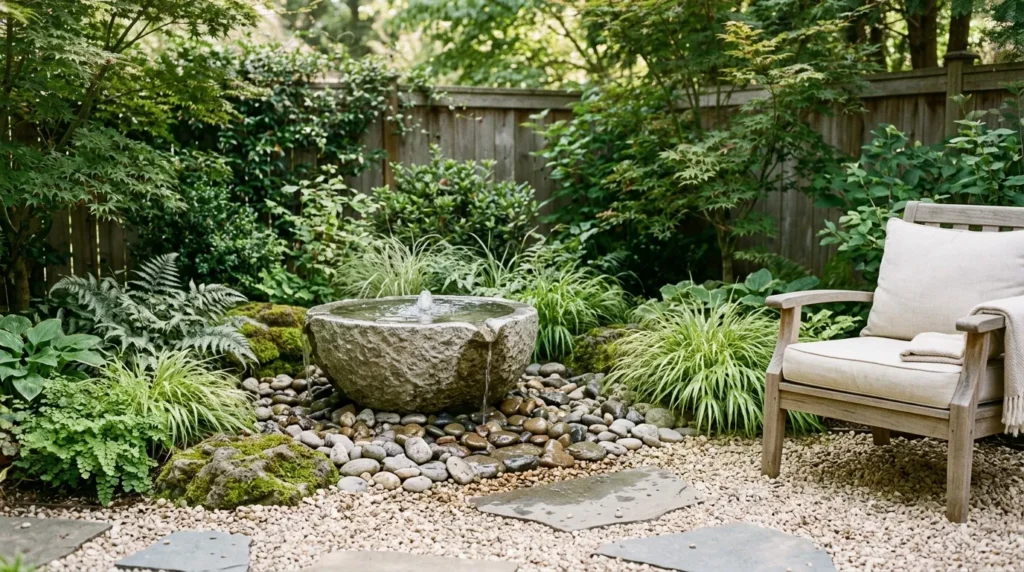
10. Water Feature
- Choose a compact bowl fountain, wall fountain, or urn.
- Place it near seating or a window for better sound.
- Use stone, concrete, ceramic, or matte metal.
- Surround it with gravel, smooth stones, or soft plants.
- Keep it easy to clean and refill.
A small water feature brings calm movement into a backyard without needing much space. The sound of water can soften street noise, nearby conversations, and general neighborhood activity. Choose a bowl fountain, wall fountain, ceramic urn, or narrow trough that fits the scale of the yard. Stone, concrete, glazed ceramic, and matte metal all work well. Keep the design simple, with one feature and a few surrounding plants. A compact fountain feels more refined than an oversized piece that overwhelms the area or creates maintenance stress later for homeowners today.
This idea works best near seating, a kitchen window, or a quiet corner where the sound can actually be enjoyed. Surround the feature with smooth stones, gravel, ferns, grasses, or one sculptural plant for a finished look. Make sure there is easy access for cleaning, water refilling, and pump maintenance. I’ve seen small fountains completely change the mood of narrow backyards because they add peace without clutter. The final effect feels spa-like, personal, and surprisingly practical for everyday outdoor relaxation in busy homes after long weekdays outside nearby too daily.