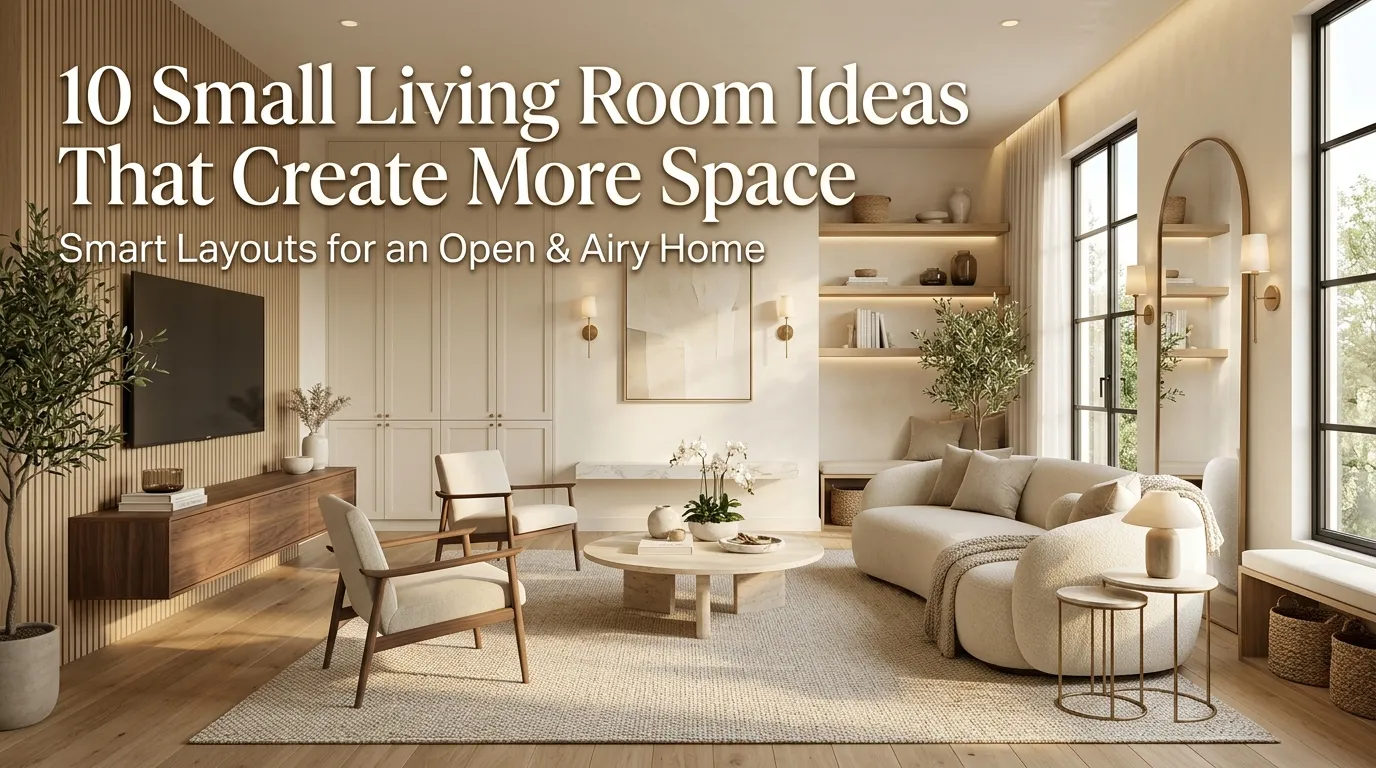
10 Small Living Room Ideas That Create More Space
A small living room doesn’t have to feel cramped or limiting. In fact, some of the most stylish homes prove that thoughtful design often works better than simply having more square footage. Whether you’re decorating a cozy apartment, a townhouse, a condo, or a compact family home, the right design choices can completely change how your living room looks and functions.
Many homeowners assume that making a room feel larger requires expensive renovations or removing walls. In reality, it’s often the smaller details—like furniture placement, color choices, lighting, and storage—that make the biggest difference. A well-designed living room should feel welcoming, organized, and comfortable while still offering plenty of space for relaxing, entertaining, and everyday life.
The best small living rooms balance beauty with practicality. Every piece of furniture serves a purpose, every decorative element contributes to the overall style, and the layout encourages easy movement throughout the room. Instead of filling every corner, smart decorating focuses on creating openness, improving natural light, and reducing visual clutter.
In this guide, you’ll discover ten designer-inspired ideas that can help transform even the smallest living room into a bright, spacious retreat. These ideas are simple enough for renters and homeowners alike while offering timeless style that won’t quickly go out of fashion.
Table of Contents
1. Light Color Palette
Create an airy foundation that instantly makes the room feel brighter and larger.
2. Multi-Functional Furniture
Choose furniture that offers storage while saving valuable floor space.
3. Vertical Storage
Take advantage of wall height instead of filling the floor with bulky storage.
4. Strategic Mirror Placement
Reflect light and visually double the size of your living room.
5. Floating Furniture Layout
Arrange furniture to improve flow and make the room appear more open.
6. Layered Lighting
Use multiple light sources to brighten every corner.
7. Slim Furniture Profiles
Select furniture with lighter visual weight.
8. Hidden Storage Solutions
Reduce clutter while maintaining beautiful design.
9. Minimal Window Treatments
Maximize natural light throughout the room.
10. Thoughtful Decor Styling
Finish the room with accessories that add personality without overwhelming the space.
1. Light Color Palette
Quick Benefits
- Makes the room feel larger instantly
- Reflects more natural light
- Creates a calming atmosphere
- Works with every decorating style
- Easy to update with seasonal accents
Why It Works
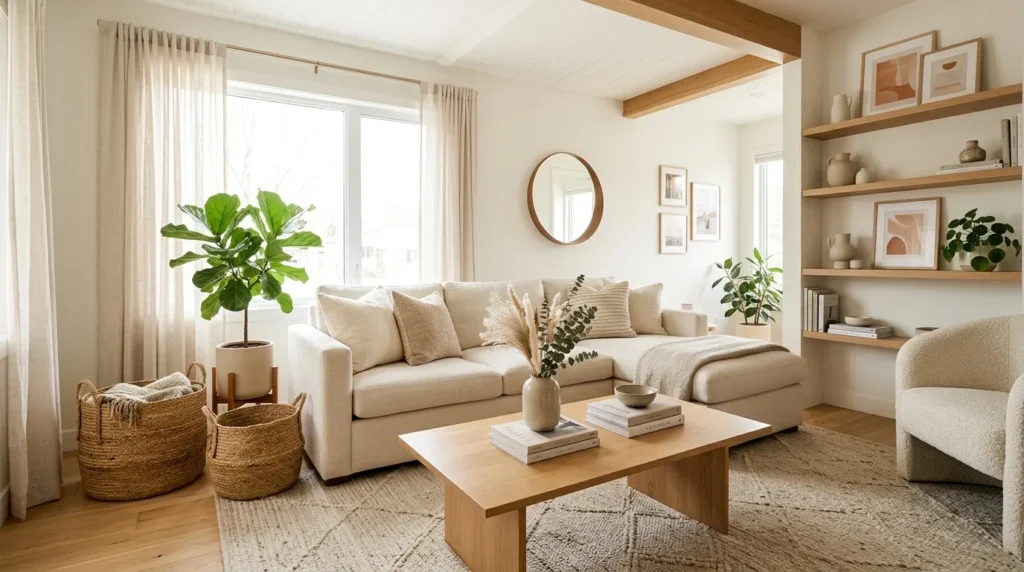
Color has one of the biggest impacts on how spacious a room feels. Soft whites, warm creams, gentle beiges, light greige, pale taupe, and muted sage all help bounce light around the room rather than absorbing it. This creates a brighter environment that naturally feels more open.
A consistent color palette also reduces visual interruptions. When walls, furniture, and larger décor pieces stay within similar tones, your eyes move smoothly around the room instead of stopping at sharp color contrasts. Interior designers often rely on this technique because it creates the illusion of continuous space.
Lighter colors don’t have to feel boring. Texture plays an important role in adding warmth and interest through woven fabrics, linen curtains, natural wood, boucle upholstery, and soft area rugs.
How To Style It
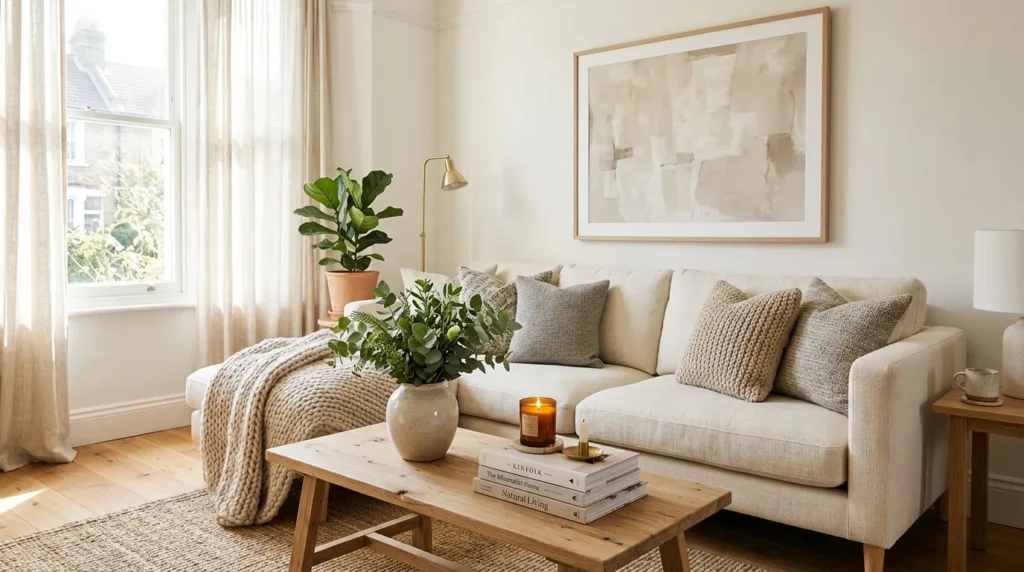
Paint the walls in a warm white or soft greige rather than bright stark white for a more inviting atmosphere. Choose a light-colored sofa and pair it with neutral throw pillows featuring subtle textures instead of bold patterns.
Layer natural materials like light oak coffee tables, woven baskets, ceramic vases, and linen curtains to prevent the room from feeling flat. Introduce greenery through indoor plants for fresh contrast without overwhelming the peaceful color scheme.
2. Multi-Functional Furniture
Quick Benefits
- Saves valuable floor space
- Reduces clutter
- Adds hidden storage
- Improves everyday functionality
- Maximizes every square foot
Why It Works
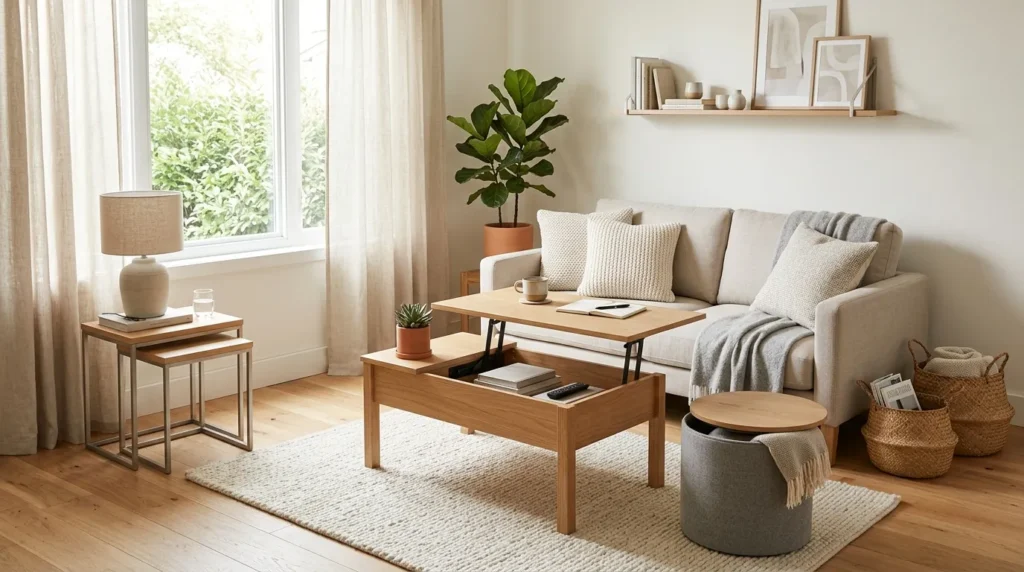
One of the smartest ways to maximize a small living room is by choosing furniture that performs multiple tasks. Instead of filling the room with separate storage cabinets, side tables, and seating, multifunctional furniture combines these features into fewer pieces.
Storage ottomans, lift-top coffee tables, nesting tables, and media consoles with hidden compartments keep everyday essentials organized while maintaining a clean appearance. Less visible clutter naturally makes any room feel larger and more relaxing.
This approach also gives homeowners greater flexibility. Furniture can easily adapt for entertaining guests, working from home, or creating additional seating whenever needed.
How To Style It
Choose a coffee table with concealed storage for blankets, books, and remote controls. Replace a traditional side table with a storage cabinet that keeps small items out of sight.
Select an ottoman that functions as additional seating, hidden storage, and a footrest. Nesting tables are another excellent solution because they expand when needed and tuck neatly away afterward. Keep the furniture finishes consistent by mixing light wood with matte black accents for a timeless designer-inspired look.
3. Vertical Storage
Quick Benefits
- Uses unused wall space
- Keeps floors clear
- Displays decorative accessories beautifully
- Makes ceilings appear taller
- Adds practical storage
Why It Works
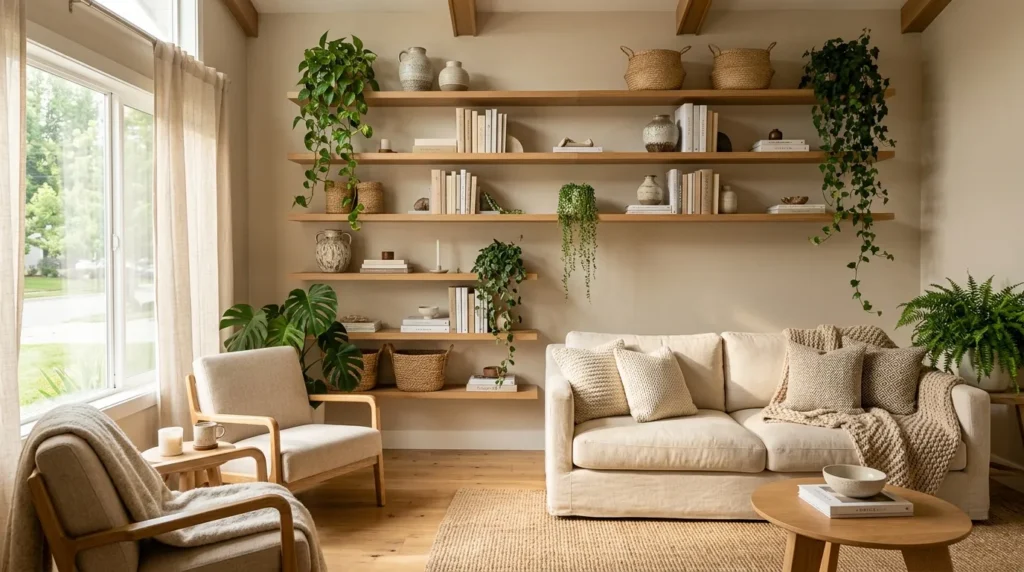
Many people focus only on floor space when decorating a small living room, but the walls provide valuable storage opportunities. Tall shelving units, floating shelves, and built-in bookcases help organize belongings without crowding the room.
Drawing the eye upward also creates the illusion of higher ceilings. Vertical design encourages visual movement from floor to ceiling, making the entire room appear larger than its actual dimensions.
Combining open shelving with decorative storage baskets allows you to display favorite books, artwork, candles, and plants while hiding less attractive everyday items.
How To Style It
Install floating shelves above a sofa or television instead of adding bulky cabinets. Arrange books horizontally and vertically to create visual variety while leaving breathing room between decorative objects.
Use woven baskets or matching storage boxes to conceal small electronics, chargers, and miscellaneous household items. Finish the shelves with framed artwork, ceramic vases, trailing greenery, and candles to create a polished designer look without overcrowding the display.
4. Strategic Mirror Placement
Quick Benefits
- Reflects natural light throughout the room
- Creates the illusion of extra square footage
- Brightens dark corners
- Adds elegant decorative interest
- Makes ceilings feel taller
Why It Works
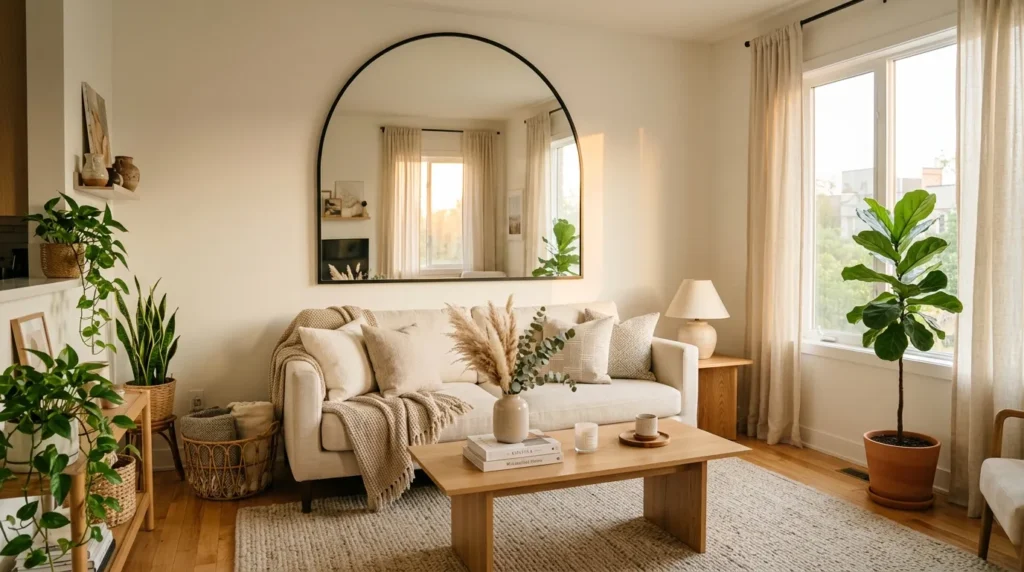
Mirrors have long been one of the simplest designer tricks for making a small room feel larger. By reflecting both daylight and surrounding décor, they visually extend the space beyond the walls. A well-placed mirror can instantly brighten the room and make it feel more open without changing the layout.
Large mirrors work especially well when positioned across from windows because they capture natural light and distribute it throughout the room. Even in the evening, mirrors reflect lamps and ambient lighting, helping the space feel warm and inviting. Choosing a mirror with a slim frame keeps the look modern while preventing it from overwhelming the room.
How To Style It
Hang a large rectangular or arched mirror opposite your biggest window to maximize light reflection. If wall space is limited, lean a tall floor mirror against the wall for a relaxed designer-inspired look.
Pair mirrors with neutral décor, warm wood furniture, and soft lighting to create a balanced atmosphere. Avoid placing too many mirrors in one room, as a single oversized mirror often has a stronger visual impact than several smaller ones.
5. Floating Furniture Layout
Quick Benefits
- Improves traffic flow
- Creates a more open appearance
- Defines conversation areas
- Prevents the room from feeling crowded
- Gives the layout a designer finish
Why It Works
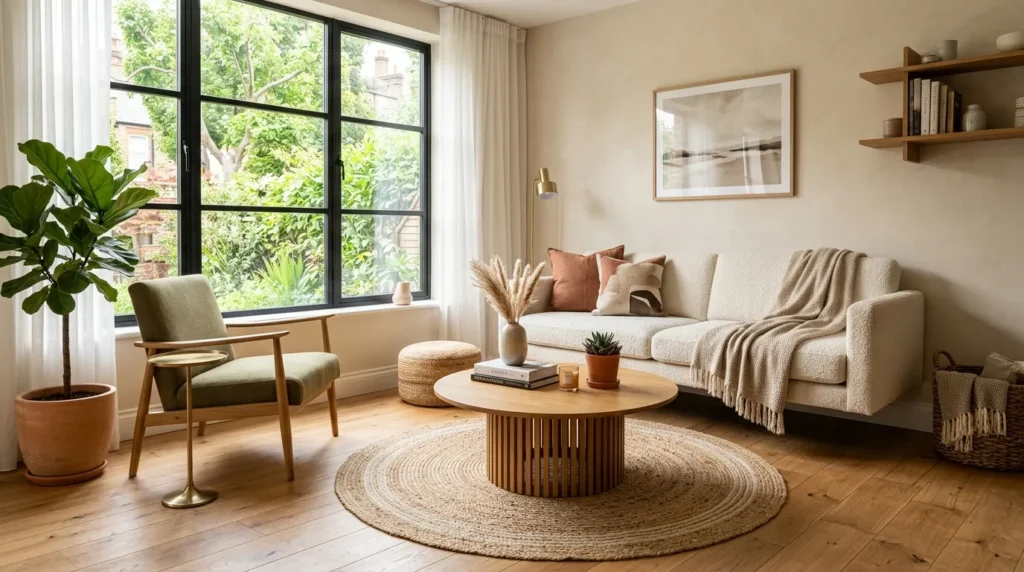
Many people automatically push every piece of furniture against the walls, believing it creates more space. In reality, leaving a small gap behind the sofa or chairs often makes the room feel more balanced and visually larger.
A floating furniture layout creates clear pathways while defining functional zones. Instead of the furniture feeling trapped around the edges, the room gains better proportion and depth. This arrangement also encourages conversation by bringing seating closer together in a comfortable grouping.
Choosing the right furniture size is equally important. A compact sofa paired with slim accent chairs often feels much more spacious than one oversized sectional.
How To Style It
Position your sofa a few inches away from the wall rather than pressing it tightly against it. Place a properly sized area rug underneath the front legs of your seating to visually connect the furniture.
Use a small coffee table in the center and leave enough walking space around it. Add one lightweight accent chair, a slim floor lamp, and a small side table to complete the seating arrangement without making the room feel crowded.
6. Layered Lighting
Quick Benefits
- Brightens every corner of the room
- Creates a warm and welcoming atmosphere
- Makes the space feel larger after sunset
- Highlights decorative features
- Adds flexibility for different activities
Why It Works
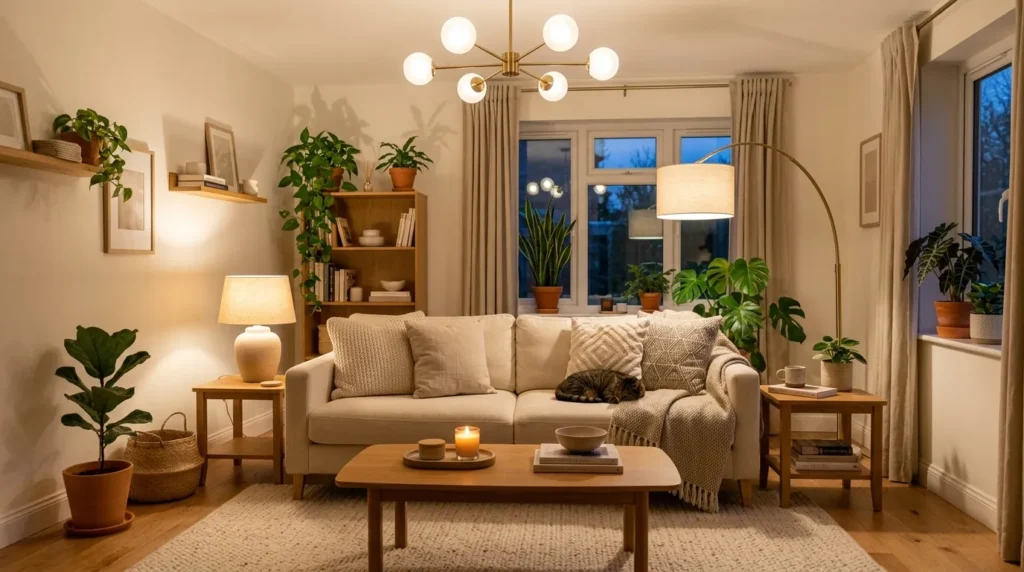
Relying on a single ceiling light often creates harsh shadows that make a small living room feel smaller. Layered lighting spreads illumination evenly, reducing dark corners and adding depth to the space. Combining overhead lighting with table lamps, floor lamps, and wall sconces creates a balanced look while making the room feel more inviting.
Warm white light also enhances neutral colors and natural materials, giving the room a cozy atmosphere without sacrificing brightness.
How To Style It
Start with a simple ceiling fixture that provides overall illumination. Add a slim floor lamp beside the sofa for reading and place a small table lamp on a side table to create soft evening lighting.
If possible, install wall sconces instead of bulky table lamps to save surface space. Choose warm white LED bulbs and use dimmers so you can adjust the mood throughout the day.
7. Slim Furniture Profiles
Quick Benefits
- Creates better visual flow
- Makes the room feel less crowded
- Improves movement around furniture
- Keeps the layout airy
- Blends with modern and classic décor
Why It Works
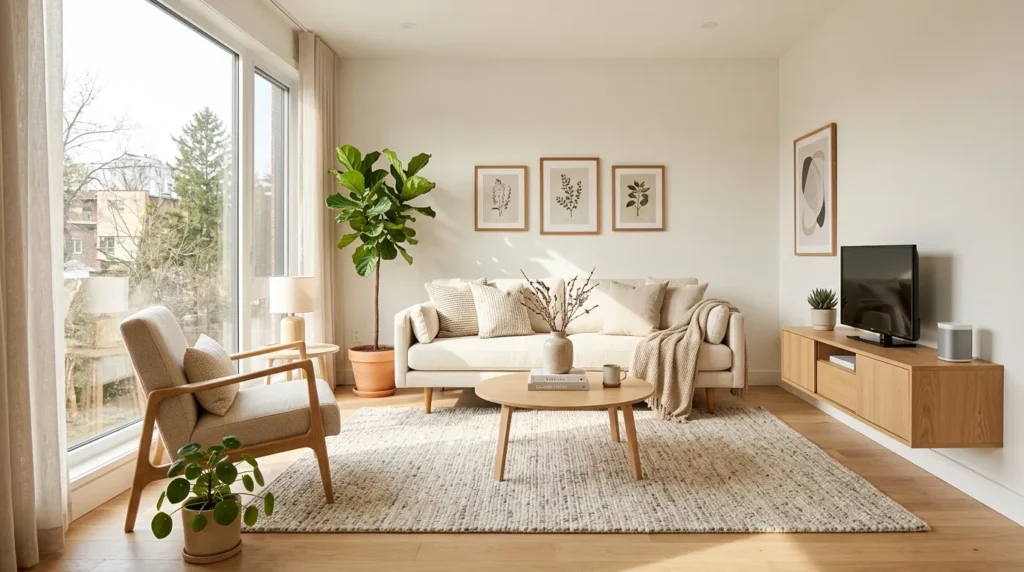
Heavy furniture with oversized arms and bulky bases can quickly overwhelm a compact living room. Furniture with slim legs and clean lines exposes more of the floor, allowing light to travel underneath and making the room feel noticeably larger.
This style creates a lighter visual weight while maintaining comfort. Many modern and Scandinavian-inspired pieces are designed specifically for smaller homes without sacrificing functionality.
How To Style It
Choose a sofa with narrow arms and raised wooden or metal legs. Pair it with open-frame accent chairs and a coffee table featuring a thin profile instead of a solid block base.
Look for media consoles and side tables with elevated legs to maintain a continuous view of the flooring. Finish the room with lightweight textiles and simple accessories to preserve the airy appearance.
8. Hidden Storage Solutions
Quick Benefits
- Reduces everyday clutter
- Keeps surfaces organized
- Maximizes limited storage space
- Maintains a clean designer look
- Improves daily functionality
Why It Works
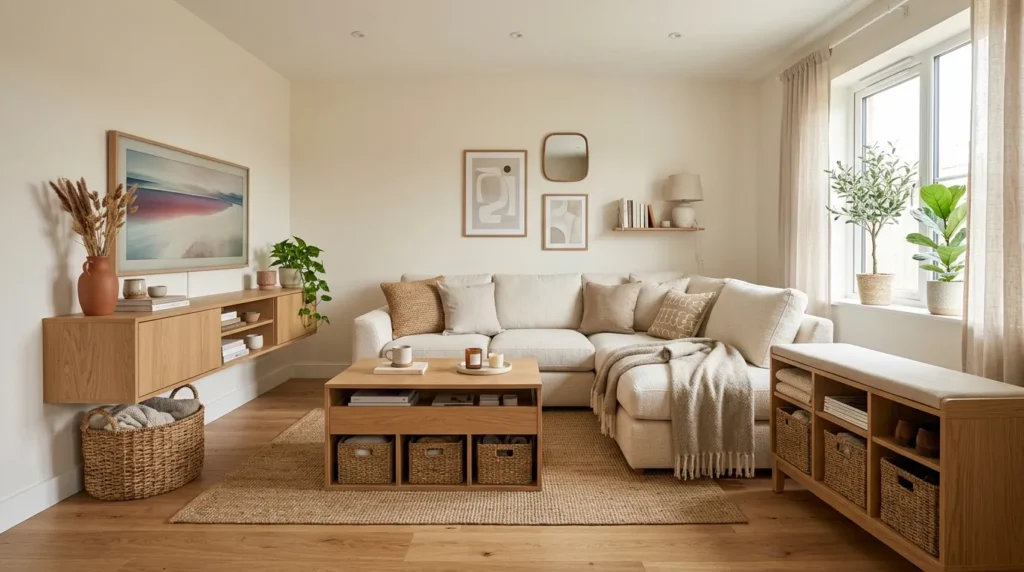
Visible clutter instantly makes any room feel smaller. Hidden storage allows everyday essentials to stay close at hand without being constantly on display. When surfaces remain clean and organized, the entire room feels calmer, more spacious, and easier to maintain.
Furniture with concealed compartments is especially valuable in apartments and smaller homes where every inch of storage matters.
How To Style It
Use decorative baskets beneath a console table or beside the sofa for blankets and magazines. Select a TV stand with closed cabinets to hide electronics, cables, and gaming accessories.
Storage benches, lift-top coffee tables, and ottomans provide additional hidden compartments while serving practical everyday purposes. Choose matching baskets and containers to create a cohesive, organized appearance.
9. Minimal Window Treatments
Quick Benefits
- Maximizes natural light
- Makes ceilings appear taller
- Opens the room visually
- Creates a clean, modern aesthetic
- Enhances outdoor views
Why It Works
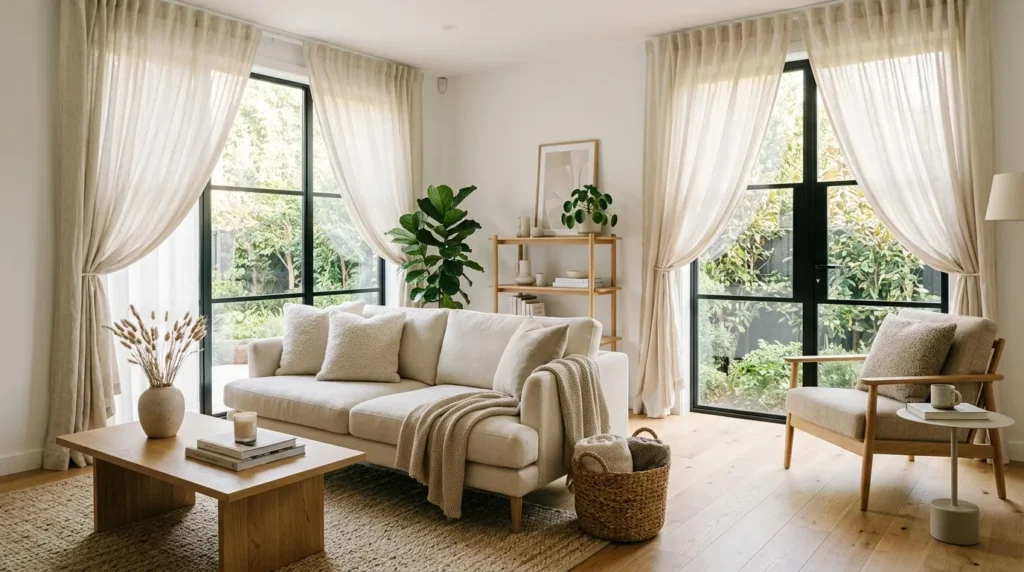
Natural light is one of the most effective ways to make a small living room feel larger. Heavy drapes can block sunlight and visually shorten windows, making the space feel enclosed.
Lightweight curtains or simple shades allow daylight to fill the room while maintaining privacy. Mounting curtain rods closer to the ceiling also draws the eye upward, creating the illusion of taller walls.
How To Style It
Choose sheer white or linen curtains that gently filter sunlight while keeping the room bright. Extend curtain rods several inches beyond the window frame so the curtains stack neatly to the sides when open.
Avoid dark fabrics and oversized valances that visually weigh down the space. Pair the windows with minimal décor so natural light remains the room’s focal point.
10. Thoughtful Decor Styling
Quick Benefits
- Adds personality without clutter
- Creates a polished designer finish
- Maintains visual balance
- Enhances comfort and warmth
- Makes the room feel intentionally designed
Why It Works
Decor should complement a small living room rather than compete for attention. Carefully chosen accessories add warmth, texture, and character while allowing the room to remain open and uncluttered.
Instead of displaying many small decorative items, a few larger statement pieces often create a stronger visual impact. Coordinating colors and materials also help the room feel cohesive and professionally styled.
How To Style It
Decorate with one or two framed art pieces, a ceramic vase filled with seasonal greenery, textured throw pillows, and a cozy knit blanket. Add a coffee table tray to organize candles, books, and decorative accents.
Limit accessories to meaningful pieces that contribute to the room’s overall style. Regularly editing your décor helps maintain the spacious feeling you’ve worked to create.
Frequently Asked Questions
How can I make a small living room look bigger without remodeling?
The easiest way to create the illusion of more space is by using light paint colors, maximizing natural light, choosing furniture that fits the room’s scale, and keeping clutter under control. Large mirrors, layered lighting, and furniture with exposed legs can also make a noticeable difference without requiring expensive renovations.
What color makes a small living room feel larger?
Soft neutral shades like warm white, ivory, cream, light beige, greige, and pale gray are excellent choices. These colors reflect natural light, create visual continuity, and help walls appear farther apart. Adding natural wood tones and subtle textures prevents the room from feeling flat while maintaining an open look.
Is a sectional sofa a good choice for a small living room?
It depends on the size and layout of the room. A compact sectional designed for apartments can work well if it doesn’t block walkways. In many cases, a standard sofa paired with one or two lightweight accent chairs provides greater flexibility while making the room feel less crowded.
How do I decorate a small living room without making it feel cluttered?
Focus on quality over quantity. Choose a few larger decorative pieces instead of many small accessories. Use hidden storage to keep everyday items out of sight, maintain a consistent color palette, and leave some empty space on shelves and tabletops. Negative space is just as important as decorative accents.
What type of lighting works best in a small living room?
Layered lighting offers the best results. Combine an overhead fixture with floor lamps, table lamps, or wall sconces to eliminate dark corners and create depth. Warm white LED bulbs provide comfortable illumination that enhances both natural materials and neutral color palettes.
Are floating shelves better than bulky cabinets?
Yes. Floating shelves provide valuable storage while keeping the floor visible, which helps a room feel more spacious. They also offer opportunities to display books, plants, artwork, and decorative objects without adding heavy visual weight to the space.
Conclusion
A beautifully designed small living room isn’t defined by its square footage—it’s defined by how thoughtfully every inch is used. With the right combination of smart furniture, light colors, practical storage, and intentional styling, even the smallest space can feel open, inviting, and surprisingly spacious.
You don’t need a complete renovation to transform your living room. Simple updates like choosing multifunctional furniture, maximizing natural light, incorporating mirrors, and reducing visual clutter can dramatically improve both the appearance and functionality of your home.
Remember that the goal isn’t to fill every empty corner but to create a balanced space that supports your daily lifestyle while reflecting your personal taste. Start with one or two of these ideas, then gradually build a living room that feels brighter, more organized, and effortlessly stylish.
Small spaces often inspire the most creative designs, proving that thoughtful decorating can make a lasting impact regardless of room size.
Related Articles
- 10 Cozy Apartment Living Room Ideas
- 10 Modern Living Room Ideas You’ll Love
- How to Decorate a Living Room Like an Interior Designer
- 10 Small Apartment Decorating Ideas That Maximize Space
- 10 Neutral Living Room Ideas for a Timeless Look